
Your skin is often the first place where aging becomes visible. Fine lines, dryness, uneven tone, and slower healing can appear long before other signs of aging are noticeable elsewhere in the body. But these changes are not only happening at the surface.
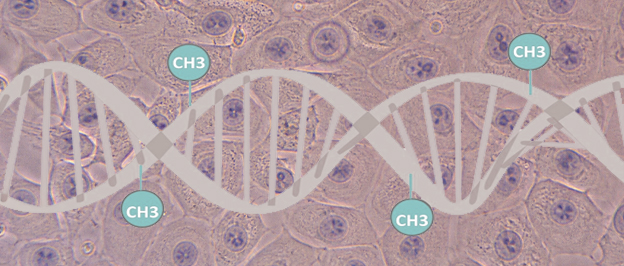
Beneath the visible signs of aging, skin cells undergo molecular changes that affect how they function over time. One important change involves DNA methylation, an epigenetic process that helps regulate gene activity.
Research suggests that DNA methylation patterns in skin are especially responsive to age-related and environmental influences, including UV exposure, pollution, inflammation, and other environmental or lifestyle-related factors. This is not surprising, given the unique role of skin: it serves as the body’s first line of defense against the external environment
What Is DNA Methylation?
DNA methylation is a natural chemical modification that helps control whether certain genes are more or less active. It does not change the DNA sequence itself. Instead, it acts as a regulatory signal that helps cells determine which genes to use and when.
These patterns are important for normal cell function, including growth, repair, immune response, and tissue maintenance. Over time, however, DNA methylation patterns can change. Some genes may become less active when needed, while others may become more active, contributing to inflammation, reduced repair, or tissue aging.
Because these changes often accumulate with age, DNA methylation is commonly studied as a marker of biological aging.
Why Skin Is Especially Vulnerable to Epigenetic Change
Unlike internal organs, skin is directly exposed to the environment every day. It constantly responds to sunlight, temperature changes, pollution, wounds, irritants, microbes, and oxidative stress. These repeated exposures place pressure on skin cells and can accelerate changes in DNA methylation.
One of the biggest contributors is ultraviolet radiation from sunlight. UV exposure can damage DNA, increase oxidative stress, and trigger inflammation. In response, skin cells activate repair pathways and stress-response genes. Over time, repeated activation of these pathways can contribute to long-term epigenetic changes.
Pollution, cigarette smoke, chemicals, and other environmental stressors may also contribute to changes in gene regulation by increasing oxidative stress and inflammation. These effects may influence genes involved in collagen production, barrier function, cell renewal, and immune response.
Cell Turnover and Epigenetic Drift
Skin also renews itself more frequently than many internal tissues. New cells are constantly produced in deeper layers of the epidermis and move upward as older cells are shed. This high rate of cell turnover is essential for maintaining the skin barrier, repairing damage, and replacing worn-out cells.
Because DNA methylation patterns must be maintained as cells divide, frequent renewal may create more opportunities for methylation patterns to shift over time. Small errors or stress-related changes can accumulate, especially when cells are repeatedly exposed to UV radiation, inflammation, or environmental damage.
This gradual accumulation of methylation changes is often referred to as epigenetic drift. In skin, this drift may be accelerated by the combination of high turnover and constant environmental exposure.
How DNA Methylation Influences Skin Function
Changes in DNA methylation are associated with altered regulation of pathways involved in collagen remodeling, cell renewal, barrier function, inflammation control, and DNA repair.
As methylation patterns shift with age and exposure, skin cells may become less efficient at maintaining structure and responding to damage. Genes involved in repair and regeneration may become less active, while inflammatory pathways may become more active. Over time, these changes can contribute to visible aging, slower wound healing, altered texture, and reduced resilience.
This connection between DNA methylation and skin function is one reason researchers are increasingly interested in epigenetic aging as a way to understand how tissues change over time.
Why This Matters for Aging Research
Skin-specific epigenetic clocks are also being developed to better estimate DNA methylation age in skin, since skin can show tissue-specific methylation dynamics that are not always captured by broader, pan-tissue models.
Studying DNA methylation in skin provides valuable insight into how aging occurs at the cellular level. Because skin is accessible and strongly influenced by both biological age and environmental exposure, it is an important model for studying how genetic, epigenetic, environmental, and lifestyle-related factors interact over time.
Skin methylation studies may help researchers identify biomarkers of aging, evaluate the effects of UV exposure and pollution, and better understand how epigenetic changes contribute to tissue decline. These findings may also support future research into interventions that protect skin function or slow molecular signs of aging.
Looking Beneath the Surface
Skin aging is not only a visible process. It reflects deeper biological changes shaped by gene regulation, environmental exposure, cellular stress, and tissue renewal.
DNA methylation helps connect these factors by showing how skin cells adapt to repeated exposure and how those adaptive responses may change with age. As researchers continue to study methylation dynamics in skin, they may uncover new ways to measure biological aging and better understand how the environment shapes epigenetic change over time.
Source: Why Skin Cell DNA Methylation Changes Faster Than in Other Organs. Idunn’s Apple, (September 14, 2025).